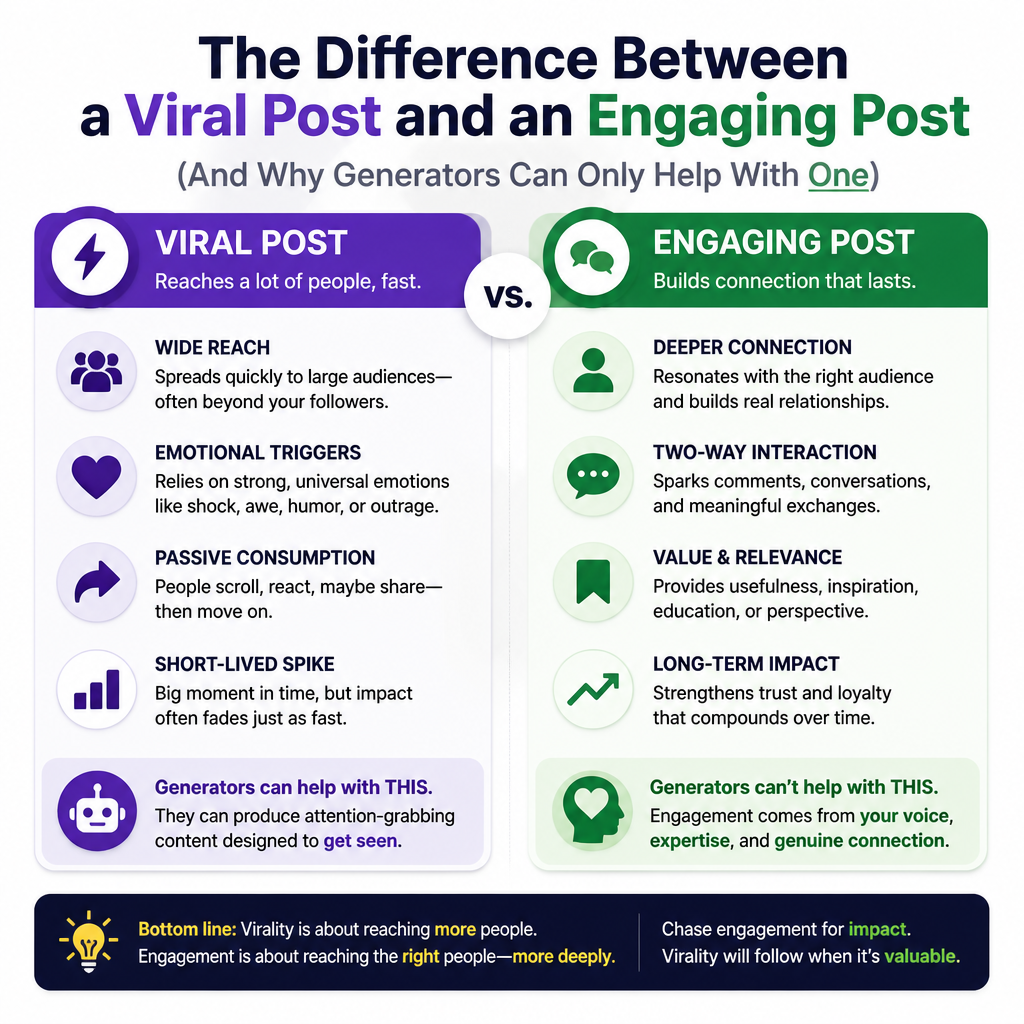
The Difference Between a Viral Post and an Engaging Post (And Why Generators Can Only Help With One)
The Mechanics Of The Algorithm
The term viral has been stripped of its technical meaning and turned into a marketing buzzword. In true epidemiological terms, virality refers to an R-naught value greater than one—meaning each person who sees a piece of content shares it with more than one other person. On modern social platforms, this is rarely a result of just good writing. It is the result of a chaotic intersection between timing, current events, network effects, and the specific state of a platform's Black Box algorithm at that exact minute.
No software tool, AI-driven or otherwise, can guarantee a viral outcome. If a service claims it has cracked the code to guaranteed reach, it is ignoring the reality of how content is distributed. Platforms like LinkedIn, X, and Meta use signal-based processing. They look for early velocity—how quickly your first ten viewers react—and decide whether to show it to the next hundred. A tool can help you prepare the content for that initial test, but it cannot force the hand of the algorithm.
The core problem with chasing virality is that it is a lagging indicator. You only know a post is viral after the fact. By contrast, engagement—likes, thoughtful comments, and intentional shares—is a leading indicator of quality. While virality depends on the whims of an automated system, engagement depends on human psychology. This is where a structured generator actually serves a purpose.
Defining Structure Over Substance
The Instant Access Tools Viral Post Generator is not a magic wand; it is a structural framework. When you use a generator, you are essentially using a template based on high-performance syntax. Professional copywriters have long used formulas like AIDA (Attention, Interest, Desire, Action) or PAS (Problem, Agitation, Solution). These are not meant to replace your ideas, but to house them in a way that the human brain can process quickly.
A generator helps with the mechanical aspects of a post that most users get wrong. For example, the hook is the first two lines of text before the See More button appears. If those lines do not create an immediate curiosity gap or state a clear value proposition, the rest of your post is irrelevant because it will never be read. A tool can suggest several ways to frame that opening based on proven rhetorical patterns.
Furthermore, clarity is often sacrificed for cleverness. We see users try to pack four different ideas into a single paragraph. A structural tool forces a single-point focus. It encourages white space, which reduces the cognitive load on the reader. In a feed where users are scrolling at high speeds, a scannable post with clear line breaks will always outperform a dense wall of text, regardless of how brilliant the prose is.
The Pitfalls of Manual Drafting
When you write a post manually from a blank cursor, you are prone to certain cognitive biases. You might assume the reader already has the context you have in your head. You might bury the lead, taking three sentences to get to the point. Most commonly, people forget the Call to Action (CTA) or make it too demanding.
Using a structured approach mitigates these errors. It ensures your CTA is singular and low-friction. Instead of asking someone to buy a product, follow a link, and leave a comment, it focuses on one move. This alignment of structure is what people often mistake for the secret sauce of virality. In reality, it is just removing the friction that usually prevents engagement.
It is worth noting that while these tools assist with text, your overall profile health matters too. Much like how a user might struggle with image formats—detailed in our guide on /blog/realistic-workflow-ai-generator-tools—the technical packaging of your content matters as much as the content itself. If your post looks like spam or is formatted poorly, the platform may de-prioritize it before a human even sees it.
The Difference Between Engagement and Reach
Reach is the number of people who saw your post on their screen. Engagement is the number of people who actually stopped to do something about it. High reach with low engagement is a vanity metric; it means the algorithm showed your post, but nobody cared. This often happens with clickbait that lacks follow-through.
True engagement requires a specific type of resonance. It requires the reader to feel that the post was written specifically for them, or that it challenges a common belief they hold. A generator can provide the shell—the bold opening, the bulleted list, the punchy conclusion—but the insight must be yours. If you ask a tool to write about a topic you don't understand, the result will be a grammatically correct but hollow post.
We suggest using the tool as a refiner. You bring the raw data, the controversial take, or the personal story. The tool provides the architecture. By separating the what (your message) from the how (the structure), you ensure that your post has the best possible chance of surviving the first few minutes in the feed.
The Value of the Hook and Scannability
Let’s look at the specific mechanisms that increase the probability of a post performing well. The first is the Hook. This isn't just a catchy headline; it's a social contract. You are promising the reader that if they click See More, they will get value. That value could be entertainment, a shortcut, or a new perspective. Our generator offers patterns like the Counter-Intuitive Statement or the Specific Achievement to help frame this.
The second mechanism is Scannability. Most social media consumption happens on mobile devices in short bursts of time. If a reader sees a block of text that looks like a legal contract, they will skip it. By using short sentences and listicles, you allow the eye to move down the page quickly. This increases the average time spent on the post, which is a signal to platforms like LinkedIn and X that your content is high-quality.
The third is the CTA. A post without a CTA is a dead end. However, a CTA that is too aggressive feels like an advertisement. The goal is to invite a conversation. Asking a specific question related to the content or offering a clear next step creates a feedback loop. When people comment, the algorithm sees more activity and expands your reach. This is the only way to achieve viral growth organically.
Why Viral is Aspirational Shorthand
When we call this tool a Viral Post Generator, we are using the term as shorthand for a post that follows the conventions of high-performing content. It is a target to aim for, not a results-guarantee. In the real world, the most successful creators are the ones who post consistently using a repeatable framework. They aren't trying to hit a home run every time; they are trying to have a high batting average.
If you use the tool to create ten posts, one might get ten times the average reach. That is the nature of social distribution. The role of the tool is to ensure that those ten posts are professional, readable, and structurally sound so that when the lightning of the algorithm does strike, you are in a position to capitalize on it.
Reliance on tools for the aesthetic and structural parts of creation allows you to spend more time on the intellectual parts. This is the same reason engineers use calculators or designers use grid systems. It doesn't devalue the work; it standardizes the quality. Your goal should be to build a library of engaging content that builds your authority over time, rather than a single viral flash in the pan that is forgotten tomorrow.
Try it:
Try our related free tools
Put this guide into practice with our free image compressor, PDF merger, and AI grammar checker — all run in your browser with no signup.
Related articles
What 'AI-Generated' Actually Means for the Captions and Posts These Tools Produce
When you use an AI tool to generate a social media post or a caption, you are essentially engaging with a high-speed prediction engine. Despite the marketing language often used in the industry, these tools do not think, nor do they understand your business goals in a human sense
AI Tool Output Isn't Final Copy — A Realistic Workflow for Using These Generators
The biggest lie in the productivity space right now is the idea of the one-click solution. You have likely seen the marketing: enter a topic, hit a button, and receive a completed masterpiece ready for publication. If you approach AI tools with this mindset, you are going to prod
Why AI Tool Output Isn't Final Copy: The Essential Guide to Human-Centric Content
Discover why relying solely on an AI tool for content creation risks brand reputation, SEO rankings, and reader trust—and how to bridge the gap with expert editing.
Why AI Captions Sometimes Miss Your Brand's Tone (And How to Fix It in One Edit)
If you have spent any time using large language models or specialized social media tools to generate captions, you have likely encountered the uncanny valley of marketing copy. You input a few details about your product or photo, hit generate, and what returns is technically corr
About the author
MD Ibrahim
Reviewed by the Instant Access Tools Editorial Team
Our editorial team builds and reviews free browser-based tools for PDFs, images, calculators and AI utilities. Every guide is written by writers who use the tools themselves and reviewed for accuracy before publication.